
Explore Christmas myths and surprising food superstitions from around the world. Discover symbolic dishes, lucky rituals, and ancient holiday beliefs.
Christmas Food Superstitions You’ve Never Heard Of
Christmas food traditions aren’t just delicious—they’re packed with ancient beliefs, lucky rituals, and quirky superstitions that shaped how entire cultures celebrate the holiday. From pudding that must be stirred clockwise to fish that protects your wallet, these myths explain why certain dishes appear on Christmas tables across the world.
If you love food stories, cultural symbolism, and the strange-but-true origins of holiday dishes, you’re about to discover Christmas myths you’ve likely never heard of.
1. The Superstitions Behind Classic Christmas Foods
The Christmas Pudding That Predicts Your Future (UK & Ireland)
One of the oldest Christmas myths says that everyone in the household must stir the pudding clockwise while making a wish.
Why clockwise? Turning counterclockwise was believed to summon bad luck.
Another superstition:
If the pudding cracked, it meant family arguments were coming in the new year.
And of course…
Coins hidden inside the pudding were signs of prosperity—if you didn’t accidentally swallow them.
The 12-Lucky-Grape Myth (Spain & Portugal)
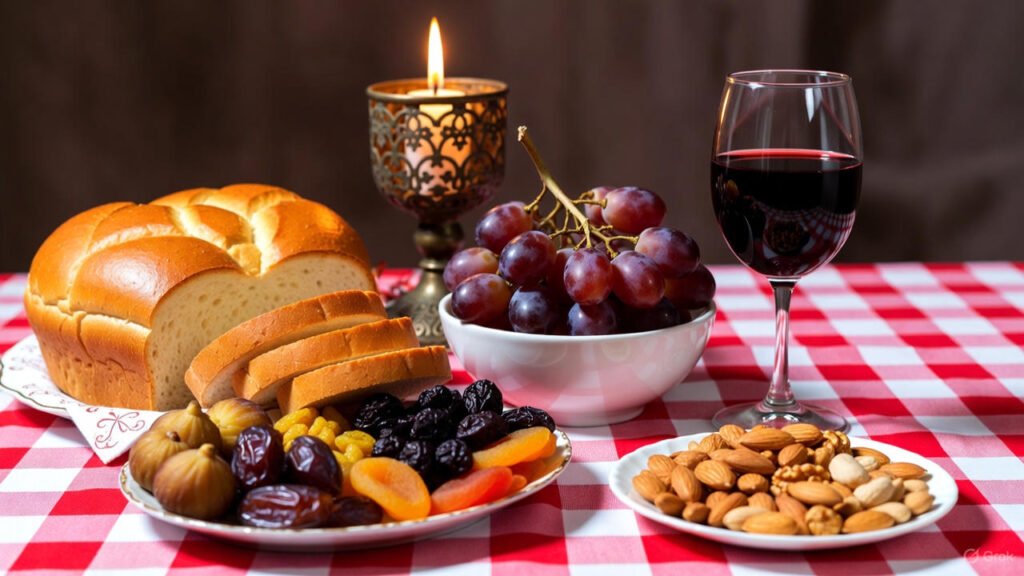
In Spain, families eat 12 grapes at midnight, one for each month of the upcoming year.
But here’s the myth most people don’t know:
If the 6th grape is sour, the folklore says June will bring challenges.
Grapes = health
Sweet grapes = good months
Sour grapes = months of struggle
It’s part superstition, part game, part chaos.
The Fish Scale Wallet Trick (Poland, Czechia)
In parts of Eastern Europe, Christmas Eve revolves around carp.
A lesser-known superstition says:
You should keep a dried carp scale in your wallet all year
→ for financial luck
→ protection from unexpected expenses
Even today, many families slip a scale into their pockets before the holiday meal.
The “Don’t Eat Until the First Star Appears” Rule (Poland)
This superstition goes deeper than tradition. The belief is:
Eating before the first star appears invites bad fortune into the home.
So families wait, scanning the winter sky until a star peaks through.
Only then can the Christmas feast begin.
The Lucky Orange at the Table (Italy & Greece)
Oranges symbolize:
🍊 Good health
🍊 Wealth
🍊 Protection
But the superstition says you must not cut the orange.
Slicing it “breaks” your luck.
So many families place whole oranges on the dinner table as a blessing for the home.
2. Christmas Food Myths From Around the World
The “Ghost of Christmas Bread” (Germany & Austria)
Stollen—the famous German Christmas bread—has a spooky myth behind it:
Families believed that throwing away leftover stollen angered household spirits.
To avoid misfortune, leftover bread was:
- shared
- saved
- or fed to birds
But never thrown in the trash.
The Myth of the Silent Fish (Scandinavia)
In Norway and Sweden, fish is connected with calm winter seas.
An old Christmas myth says:
Eating fish on Christmas Eve keeps storms away for the rest of winter.
Fishermen believed that skipping Christmas fish was tempting fate.
The “12-Dish Rule of Honor” (Ukraine)
Ukrainian households prepare 12 symbolic dishes, one for each apostle.
If you serve fewer, superstition claims the home will face hardship.
If you serve more, it’s believed that the blessings “don’t count.”
This rule is taken so seriously that even the simplest homes follow it closely.
The Japanese Strawberry Cake Myth
Japan’s tradition of Christmas cake (a sponge cake with strawberries) isn’t religious—it’s symbolic.
Myth says:
If you receive a cake with a missing strawberry, someone is jealous of you.
This superstition grew from ancient color symbolism:
- Red = protection
- White = purity
Missing the red berry meant missing protection.
The King Cake Bean Myth in France
Annual French holiday cakes often include a hidden bean.
Whoever finds it becomes “king or queen for the night.”
But the lesser-known myth says:
Refusing the crown invites a year of misfortune.
So even the shyest family members wear the paper crown with pride.
3. Strange, Quirky, and Surprisingly Dark Christmas Food Myths
The Bread That Must Never Fail to Rise (Ireland)
Irish folklore warns:
If your Christmas bread doesn’t rise, illness will visit the home.
So families were extra careful—no loud noises, no door slamming, no cold drafts—anything to “disturb” the rising dough.
The Christmas Garlic Protection Ritual (Eastern Europe)
Garlic isn’t just food—it’s protection.
On Christmas Eve, families would place garlic under plates.
Why?
To “ward off evil spirits that roam the winter night.”
Yes, even Christmas had supernatural fears.
The Myth of the Silent Dinner (Lithuania)
Lithuanian Christmas Eve dinner was eaten without metal cutlery.
Forks and knives were believed to disturb spirits visiting the home.
Wooden spoons? Safe.
Metal? Doorway to bad luck.
FAQs — Christmas Food Superstitions & Myths
1. What is the most common Christmas food superstition?
Stirring Christmas pudding clockwise for good luck is one of the most widespread holiday myths.
2. Why do people hide objects in Christmas foods?
Coins, beans, and charms were symbols of fortune, meant to predict prosperity in the new year.
3. What foods are considered lucky at Christmas?
Oranges, fish, sweet bread, grapes, and coins-in-pudding are all linked with good luck.
4. Where did the 12 grapes at midnight superstition start?
It began in Spain in the early 1900s as a symbol of hope for the new year.
5. Why do some cultures avoid meat on Christmas Eve?
In Eastern Europe and parts of the Mediterranean, it’s tied to ancient religious fasting traditions.